About us
The Scottish Episcopal Church is an open, discussing and engaging church in Scotland and is a member of the world-wide Anglican Communion. It is a diverse church which is widely respected for the quality of its ministry and worship and for the thoughtful dialogue which is characteristic of its life.
What is Christianity?
“God is love, and those who live in love live in God, and God lives in them”
1 John 4:16
What became Christianity started off with a Jewish prophet called Jesus. He was born into a world controlled by an invading force – the Roman Empire. He challenged both the political and religious elites of his day, and called people into a new way of living.
Many people believed he was the “Messiah” (the “Christ” in Greek). That word Messiah was a powerful one to the Jews. For some, they thought the Messiah was someone chosen by God to lead the Jewish people into freedom from their Roman oppressors. But the freedom Jesus was calling them into was more than just political liberty.
Jesus taught and lived a life of loving God and loving our neighbour. He was deeply concerned with the inequity of wealth, where some starved and some lived in luxury. He challenged unjust systems in his own society, basing his ministry of healing and preaching on compassion for the poor and those who were shunned by society, such as lepers, prostitutes, people of other religions, criminals, the “unclean”.
As so often happens to those who speak truth to power, the Roman rulers and the Jewish religious leaders were determined to silence him and Jesus was crucified. But the will of God works in ways unknown to human knowledge, and Christians believe that his death on the cross, and the seeming failure of his ministry, was transformed by God into the means by which God saved humanity from it’s own folly. Even those who crucified Jesus can be saved by the transforming love of God.
The stories of the Resurrection, strange and mysterious accounts of the disciples’ encounters with Jesus after they discovered the empty tomb, show us that death was not the end of Jesus’ ministry among us. By showing that love is stronger than death, Jesus enabled his followers to know something of the fullness of life into which all people are called.
So Christians, originally called “followers of the Way” are devoted to worshipping God and his Son Jesus through prayer and praise. Being a Christian is far more than knowing the facts of Jesus’ life, or agreeing to what Christians hold as true. It is a way of living, based on the belief that God is love, and the more we make that love present, the more God is revealed in the world. This practice finds expression in a myriad of different ways: the deep spirituality of the monasteries and convents, the beauty of the orthodox liturgy and music, the simplicity of the spoken word, the mystery of traditional worship. A rich tapestry of styles, all devoted to the love and worship of God.
The gospel of John ends by saying “there are also many other things which Jesus did; were every one of them to be written, I suppose that the world itself could not contain the books that would be written.” We believe that is true, because Jesus is at work in us today – and his love will never cease.
What does it mean to be a Scottish Episcopalian?
People sometimes speak of ‘discovering’ the Scottish Episcopal Church – as if they have happened upon a treasure. That may be because as a church it is small in size if not in ambition.
And it may be because what makes us special isn’t immediately ‘in your face’. It is subtle and nuanced, and all the more special for that.
The Scottish Episcopal Church is a deeply Scottish Church whose history is interwoven with the whole story of Christianity in Scotland – back to the Celtic Saints like Ninian and Columba and through the Scottish Reformation and all the turbulence which followed.
The Scottish Episcopal Church is passionate about its membership of the Anglican Communion and has a global vision of its place in the world church.
In character, the SEC is diverse. The church celebrates diversity and values dialogue alongside dogma.
Much of the worship of the church is sacramental in character – its patterns of worship are full of drama and colour which links together the experiential with the intellectual.
The Scottish Episcopal Church likes to think of itself as a thinking church and values a high standard of preaching. Alongside that thoughtfulness goes a deep commitment to spirituality and prayer.
In its governance, the Scottish Episcopal Church is collegial and democratic rather than centralised and directive. It delights in its non-established status.
It is deeply committed to civic society and public discourse but wants nothing to do with establishment. It is more a community of disciples than an institution with membership.
The SEC today pursues its calling to mission and ministry in the very secular and increasingly diverse context of Scotland and the rest of the world.
The seven bishops see themselves as ‘leaders of mission’ and the church attempts to draw into its life people who are beginning to travel a journey of spirituality.
The Scottish Episcopal Church in Scotland
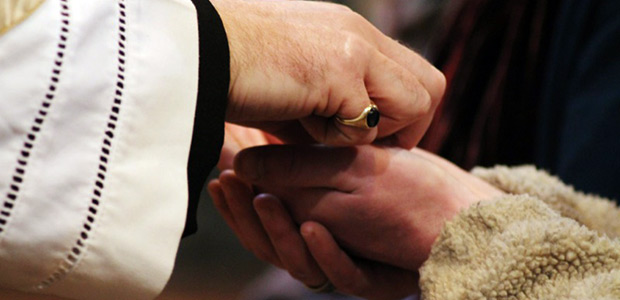
The Scottish Episcopal Church sustains a vigorous life in Scotland today.
While it is relatively small in numbers, it is widely respected for the quality of its ministry and worship and for the thoughtful dialogue which is characteristic of its life.
Scottish society is secular in character and increasingly diverse. The Scottish Episcopal Church (SEC) is increasingly engaged in relationship with the Scottish Government and in wider public discourse. The SEC likes to see itself as a ‘thinking church’ and it has a culture of lively debate.
The Scottish Episcopal Church is diverse in character. There are strong congregations of evangelical tradition while much of the church retains the catholic influence of the 19th century Oxford Movement.
Those who encounter the SEC’s life and worship are drawn into the colour and dignity of its worship and the quality of its thinking.
Leadership is collegial and democratic and there is a strong culture of sharing of ministry between clergy and laity.
The Scottish Episcopal Church is deeply committed to the development of ecumenical relationships and has been a leader in the development of interfaith relationships in the increasing diversity of Scotland today.
The Scottish Episcopal Church In the Anglican Communion
The Scottish Episcopal Church is one of the 44 provinces and churches which make up the 80 million membership of the Anglican Communion across the world.
Communion membership is important to the Scottish Episcopal Church. The consecration by the Scottish bishops of Samuel Seabury as the first bishop of the Episcopal Church in the United States of America in 1784 was one of the events which shaped the Anglican Communion as a family of independent provinces.
That shared history shapes a strong bond between the SEC and The Episcopal Church in the USA.
The Scottish Episcopal Church retains a strong commitment to the life of the global Anglican Communion.
The history of the Scottish diaspora provides a network of contacts across the world and the commitment of the SEC to world mission involves the SEC in partnership with local churches.
The dioceses of the Scottish Episcopal Church sustain a strong network of companionship relationships with dioceses in other provinces.
Members of the Scottish Episcopal Church are active in many aspects of the life of the Anglican Communion, particularly in the Anglican Communion Networks.
While deeply committed to the life of the Anglican Communion, it is characteristic of the Scottish Episcopal Church to express a determined independence of thought and action.
The Scottish Episcopal Church was one of the first provinces to make a clear decision not to adopt the Anglican Covenant.
History
The roots of the Scottish Episcopal Church trace back to the beginnings of Christianity in Scotland.
The distinctive identity of the Church was shaped by the Scottish Reformation which was followed by over a century of alternating between an Episcopal or Presbyterian national church.
The 1689 Revolution established the national Church of Scotland as Presbyterian and an independent non-established Scottish Episcopal Church was formed.
The Scottish Episcopal Church has seen many changes, however its distinctive worship and commitment to Scottish communities remains constant.
In recent years the Church has become known for its involvement in the social issues affecting Scottish society. For more information about the recent work of the Church visit the News and Views section.
If you wish to find out more about the journey of the Scottish Episcopal Church please download our publication:
A Church for Scotland – A History of the Scottish Episcopal Church by Gerald Stranraer-Mull.