Spirituality
‘Spirituality’ is not something owned by any one Church or religion. It is how we journey through life in relation to those things which are of ultimate importance to ourselves. These might be a personal sense of integrity, a code of ethics, a deep personal commitment to the other human and sentient life around us.
For Christians it can be all of these things but each one finds their meaning and purpose in God. For the Christian, the spiritual journey is one of relating to this God, who is the ultimate cause and meaning behind everything that is.
Like all journeys, we need vehicles to help us on our way. A life which includes prayer, public and private, spiritual reading, silence and serving others, is a spiritual life on a journey with God.
In this section we provide forms of prayer and guidance. Each is a recommendation. Try them and see how they help you on your journey with God. Remember, though, often the best guidance and help can be found in being with those also on the journey in your local Church community and its ministers.
Since the 1960s increasing numbers of people have turned to spirituality rather than religion as a source of solace and to find sanctuary from the busy consumer world. People are eager to express their spirituality and to promote spirituality in society…What people mean when they use the word ‘spirituality’ varies enormously. When somebody says that they are spiritual this could mean they enjoy meditation or that they like to go for solitary walks. Or it could mean that they appreciate great art or that they love music. Above all, it usually means that they believe in the infinite value of human love.
Spiritual Growth
In the Episcopal Church we enjoy a spiritual tradition which can sustain a lifetime of deepening Christian discipleship for laity and clergy alike.
It is rooted in the daily praying of the scriptures, regular celebration of the Eucharist
(the service at which Christians follow Jesus’ wish that his followers meet to break bread and share a cup of wine as he did with his first disciples), and guided exploration of the riches of personal Christian prayer.
This balanced approach, if embedded over time in peoples’ lives, grounds us in the gifts of God to us all in our faith tradition, centred upon Jesus Christ in whom God’s life and our life are brought together, as the Liturgy puts it, in a wonderful exchange.
Because it has the Eucharist at its heart it also affirms the capacity of the world around us to disclose God’s presence. A prayer commonly used in our churches when bread and wine are offered captures this very well:
“Blessed are you Lord God of all creation, through your goodness we have this bread to offer, which earth has given and human hands have made. It will become the bread of life.”
Our lives are formed, and we grow spiritually, in the constant interplay between the divine gift and our human response, a wonderful exchange indeed.
In our churches you will find plenty of opportunities for people to learn of these riches and to explore them in ways that are appropriate to their own stories and journeys, for the life of our church has a clear liturgical framework but also plenty of space for exploration and experiment.
Episcopalians look to all of this as a normal part of congregational life, certainly during the special seasons of Lent (before Easter) and Advent (before Christmas), but not only then.
Study groups, prayer groups, courses, alternative forms of worship abound – their great variety makes it likely you will find something to help you grow in Christ.
Our approach to the spiritual life offers a humane balance of freedom and discipline, scripture and tradition, and reflection on contemporary experience, encompassing all sorts of practices such as retreats, quiet days, sacramental confession (all may, none must, some should) and silence, to name only a few.
The aim is not to create holy huddles but, with time, attention and perseverance, to form prayerful people who can engage the world out of God’s engagement with them in the common life of the spirit and the body of Christ.
How to Pray
Prayer is more
Than an order of words, the conscious occupation
of the praying mind, or the sound of the voice praying.
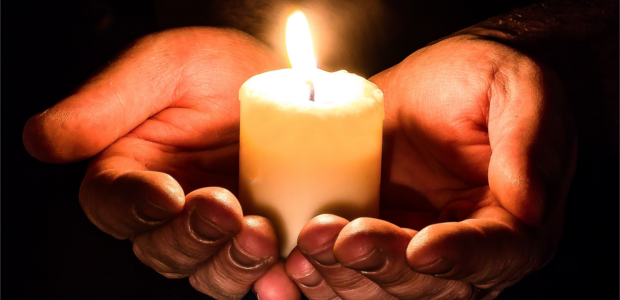
For many Prayer is a daily, moment by moment, experience of talking to, listening to, and being with God. Talking to God, because our natural impulse is to share, to express the joys and sorrows we all know; listening, by opening our hearts to God’s voice and guidance in scripture, silence and through other people.
Simply being with God, in a relationship where words aren’t always needed and sitting in God’s presence is enough.
This experience of God in prayer not only renews our lives and the life of the Church. It also makes us fellow travellers with people of faith of many different traditions and gives us a language of spirituality we can share when “faith” can so often seem to divide.
In our Christian tradition there are many pathways into living with God through the Spirit of Jesus who lives and prays in us and for us. When prayer can seem difficult or boring or God can seem silent, there are ways to help us listen afresh and encounter God in new ways.
Holy Communion
As a Church we welcome all to worship with us on Sundays and throughout the week. We are friendly and inclusive – children are always welcome.
Often called The Eucharist and The Liturgy, Holy Communion is the most common worship service in our Church. The service recalls and celebrates Jesus’ Last Supper with his disciples the evening before his death on the Cross, and encourages us as the Christian family today. As such the Eucharist is a sacrament of the Church, a channel of God’s love and grace in our lives.
The service takes us on a journey: in the first part we prepare, reflecting on our shortcomings, listening to Hebrew and Christian readings from the Bible; a sermon or talk is given, we state our beliefs, pray for needs of the world, and acknowledge each other as a community in the peace of Christ.
The second stage takes us to the heart of the sacred meal, both historically and in the here and now. We celebrate the glory of God our creator, the sacrifice of his Son Jesus Christ and the life-giving power of the Holy Spirit. Bread and wine are taken, blessed, broken and given.
Sharing in the life of Christ’s sacrificial and broken body and transformed ourselves, we are called to become servants of the kingdom here on earth.
The bread and wine are shared amongst the congregation and it is usual for baptised Christians of all ages to receive i.e. to make their communion. Nobody need feel left out as a personal blessing is always available as an alternative.
Finally the congregation is blessed by the priest and sent out to love Christ and to serve our neighbour in daily life. The Christian journey continues.
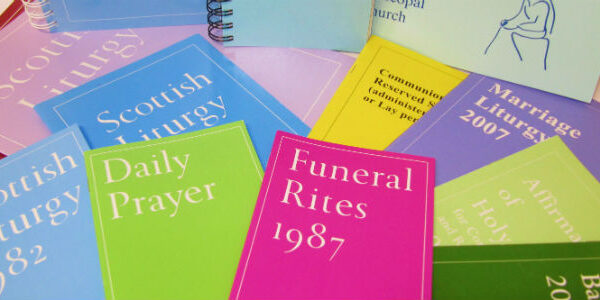
Our Scottish Liturgy is usually in modern language (dating from 1982), although more traditional words can be used. The service may be enriched by music and drama, vestments and incense, by digital technology and interactive participation.
You may wish to follow the service book or sheet closely – alternatively the words and actions and music will surround you in their own way. The priest or service leaflet will provide local guidance about what to do and where to go throughout the service.
Most services have a time for refreshments afterwards when you can meet other people and discover more about the Christian faith and the local church.
Buildings and Quiet Spaces
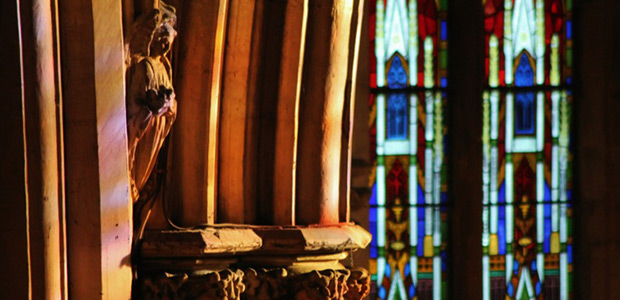
Sacred Space
Most of us at various times in our days need a bit of peace and quiet.
We also need opportunities to get away from the hustle and bustle of everyday life as well; to find a bit of space, space in which we can reflect, meditate, pray or just to ‘sit and be’.
The Scottish Episcopal Church is blessed with many places in which this ‘quiet space’ can be found. Our church buildings and our gardens offer sanctuary and an oasis of calm to anyone who may seek it.
Many of our buildings are open during the day and if not there are often ‘wayside chapels’ in porches and benches in the gardens where one can find sanctuary in the midst of a busy day.
Some of our churches and gardens offer ‘food for thought’ or aids to prayer – objects or texts that can lead one into contemplation; contemplation of on your life and of the divine as well.
When you are able to take a bit of time to create a sanctuary space you can often leave it feeling refreshed and renewed, with your head cleared and your thoughts organised.
‘Sacred space’ which this becomes is re-energising for both the body and the soul.
Sacred space in common language is a ‘chill out zone’ and these zones become ‘sacred’ or special by the way we use them; be it for prayer or by creating an opportunity to gather our thoughts.
When we create such places for ‘time out’ and relax into them God can come close to us and we can hear that ‘still small voice of calm’ that so many of us seek.
Why not try exploring the ‘sacred space’ offered by your local Episcopal church?
Or try the simple Celtic approach of drawing a circle around yourself, in the air, with the intention of making your immediate space sacred, then relax into that sanctuary and spend some quality time with God and yourself.
Create around me God,
a place of stillness and of peace;
a place where I might find the time
to reflect and relax;
a place where I might hear your
still small voice;
a place where I might be renewed.
Amen.
Music

Music is an integral part of the life of the Scottish Episcopal Church… the combination of music used in our liturgies, whether it be songs we sing ourselves, songs we hear sung, or instrumental music played – all of these combine to bring life to our liturgies and spiritual nourishment.
There is a great variety of music being used in our churches… from the beauty of ancient plainsong to choral anthems written this century… from ancient hymns to worship songs… from texts that are centuries old to texts from some of the finest hymn writers of the 20th and 21st centuries… from Scottish metrical psalms to songs from the global church… all find their place in seeking to enrich our worship.
Likewise, a variety of instruments are used in our churches… many have fine pipe organs that are played every week, others have a variety of instrumental ensembles that lead worship, and some use a combination of both. These and various choirs, singing groups and cantors enable many to contribute to the worshipping life of the church.
Whether it is a regular Sunday service, or one of life’s special moments – a baptism, a marriage or a funeral – in all of these, the music we use plays a crucial part in drawing us together as a church community, and in drawing us into the nearer presence of God.
Other Worship Services
There’s more than Sunday
You could be one of the countless numbers of people who have to go to sports training on a Sunday. You might be the busy local council or factory worker whose only time to go shopping is when the churches are opening up on Sundays. Or you might be someone who has to work on a Sunday.
How, the question needs to be asked, do you go to church – assuming of course that you want to. The answer is easy: go and look for somewhere near to where you live where there is a worship service outside the normal and historic Sunday morning slot.
This might take place in someone’s home and be very quiet and informal where perhaps half a dozen people quietly gather to worship. The service might be very formal and track through a very definite little booklet. There might be singing in it. There’s bound to be prayers, bible reading and in some cases holy communion. It’ll be simple and very friendly. Such occasions always are.
But it could be more boisterous. This often is the case when parents and grandparents of children take youngsters to services – perhaps in churches, or maybe a local hall, or even schools. In the past these have been called ‘pram services’, but that terms is a bit unfair if the children are older. A more modern term is ‘Messy Church’. The worship is activity and teaching based, and is framed around the age and stage of those who take part in it, young and old together.
Some services are based around the needs of adults with, for example, learning difficulties or mobility problems. The Episcopal Church is currently doing a lot of developmental work in worship for children with, for example, Down’s Syndrome. On another front church services are being increasingly planned in cafés, street corners and wherever people naturally meet – care homes is one such example.
Basically we know that whatever you are looking for it can and will be met. You simply need to start asking everybody questions and saying what you need. Very soon you’ll soon find you’re getting all the right answers to your questions.