Bishops and their Dioceses

There are seven Scottish regions – each known as a Diocese – which form the structure of the Scottish Episcopal Church.

Each Diocese is run by a Diocesan Bishop who oversees the spiritual and practical concerns of all the clergy and lay people within their own diocese.

The seven bishops together comprise The College of Bishops. Within the College a ‘primus inter pares’ is elected to act as ‘first among equals’ in his role as Senior Bishop. The current Primus is the Most Rev Mark Strange, Bishop of Moray, Ross & Caithness.

Dioceses

The United Diocese of Aberdeen & Orkney is in the north east of Scotland and covers Aberdeen, Aberdeenshire, Orkney, the Shetland Isles and a small part of Moray.

Bishop Right Reverend Anne Dyer
Contact Diocesan Office
University of Aberdeen
Marischal College
Broad Street
Aberdeen
AB10 1YS
Phone 01224 662 247
Website http://aoepiscopal.scot

The United Diocese of Argyll & The Isles covers the mainland of Argyll and stretches from the northern tip of Lewis to the Mull of Kintyre encompassing the Hebrides, Skye, Mull and Iona. It also covers Bute, Arran and Cumbrae.
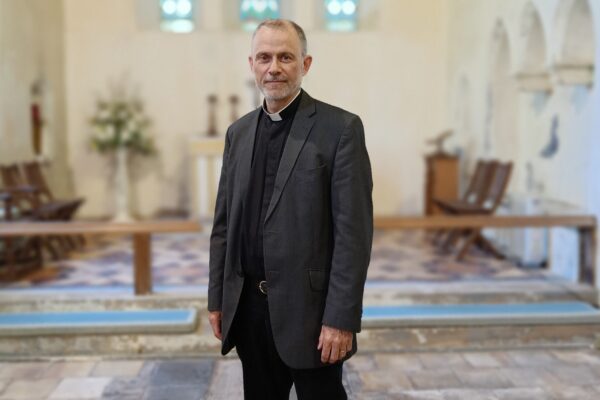
Bishop Rt Rev David Railton
Contact St Moluag’s Diocesan Centre
Croft Avenue
Oban
PA34 5JJ
Phone 01631 570 870
Website http://www.argyll.anglican.org/

The Diocese of Brechin is the City of Dundee, Angus, the Mearns and Carse of Gowrie.
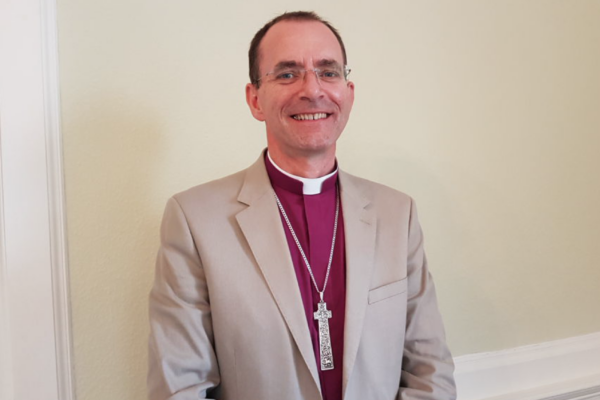
Bishop Right Reverend Andrew Swift
Contact Diocesan Office
c/o 5 Ballumbie View
Dundee
DD4 0NQ
Phone 07444161300
Website https://www.thedioceseofbrechin.org

The Diocese of Edinburgh covers the whole of the Lothian, Falkirk and the Scottish Borders.

Bishop Vacant See
Acting Bishop The Most Rev Mark Strange, Primus
Contact Diocesan Office
21a Grosvenor Crescent
Edinburgh
EH12 5EL
Phone 0131 538 7033
Website http://www.edinburgh.anglican.org/

The United Diocese of Glasgow and Galloway covers south-west Scotland and includes the counties of Ayrshire, Lanarkshire, Renfrewshire, Dunbartonshire, West Stirlingshire, Wigtownshire, Kirkcudbright and Dumfriesshire.

Bishop Rt Rev Dr Nicholas Bundock
Contact Scottish Episcopal Church
Diocese of Glasgow and Galloway
49 Cochrane Street
Glasgow
G1 1HL
Phone (1) 0141 221 5720
Phone (2) 0141 221 6911
Website http://glasgow.anglican.org/

The Diocese of Moray, Ross & Caithness covers Caithness and Sutherland, mainland Ross and Cromarty, mainland Inverness-shire, Nairnshire, Moray and Banffshire.
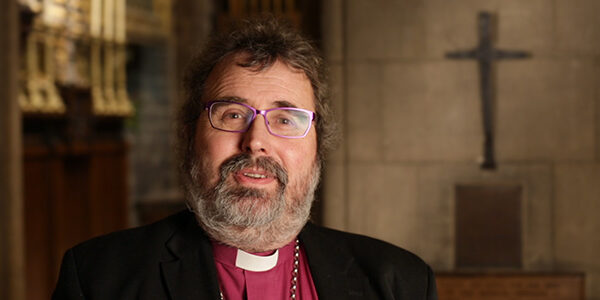
Bishop of Moray

Bishop Most Reverend Mark Strange
Contact Diocesan Office
St Mary’s in the Field
Culloden
Inverness
IV2 7LL
Phone 01463 811333
Website https://moray.anglican.org

The United Diocese of St Andrews, Dunkeld and Dunblane covers Fife, Perth and Kinross, Clackmannanshire and eastern and central Stirling.
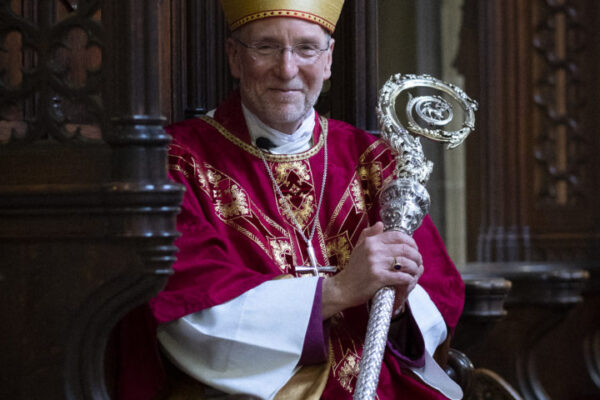
Bishop Right Reverend Ian Paton
Contact Diocesan Office
28a Balhousie Street
Perth
PH1 5HJ
Phone 01738 443 173
Website https://standrews.anglican.org/

Electing a new Bishop

The process for the election of a new bishop of a diocese is detailed in Canon 4 “Of the Calling and Election of Bishops to Vacant Sees”. There is a long-established principle in the Scottish Episcopal Church that every diocese should elect its own bishop.

It is a single electoral process in three possible stages, set in motion by a Mandate from the Primus, normally issued within 21 days of a See becoming vacant. The Electoral Synod (comprising both clergy and lay members of the diocese) is the body responsible for the election. While it is expected that the whole process will be completed within a year, the Electoral Synod at its Preliminary Meeting will agree its own timetable for all three Stages. It has two opportunities under Stages One and Two to elect, and if the first two Stages do not produce a result, the election passes to the bishops meeting in Episcopal Synod.

The Electoral Synod is assisted in its task by a Preparatory Committee comprising six representatives of the diocese and five members from outside the diocese to represent the wider Scottish Episcopal Church. The Preparatory Committee invites nominations for the vacancy, receives applications, conducts interviews and draws up a short-list of names of candidates for the vacant bishopric. At the First Stage the List must have a minimum of three names and a maximum of five names. At no time are the names of short-listed candidates made public, and they are treated as confidential, along with all documents and proceedings under the electoral process. The Electoral Synod meets with each of the short-listed candidates. A separate Electoral Meeting is then held, and the vote takes place.

If there is no election at the First Stage, following a meeting of the Electoral Synod, the whole process is repeated at the Second Stage. The List at the Second Stage must contain no fewer than two or more than five names.

If there is no election at the Second Stage, the right of election passes, under the Third Stage, to the Episcopal Synod. All members of the College of Bishops normally attend the Preliminary Meeting of the Electoral Synod at the start of the process so that they are fully informed of the needs and aspirations of the diocese. If a Third Stage is required, then prior to the Electoral Meeting of the Episcopal Synod, the bishops meet with the Diocesan Members of the Preparatory Committee to consider the reasons why there has been no election under the two previous Stages, and to discuss the particular needs of the diocese.

Once an election has taken place under any of the three Stages, and the bishop-elect has accepted the election, the name of the bishop-elect is announced publicly, and arrangements are made for their Consecration and Installation. This normally takes place within 3 to 4 months from the date of election.

All those participating in the process should receive training on the process and on spiritual discernment. The General Synod has adopted (a) Guidelines for the election of a bishop and (b) a Commentary for all parties involved in the Electoral Process, copies of which will be provided to all Electors and which are available on the provincial website: https://hillside.work/sec/staging/who-we-are/publications/code-of-canons/.

Appointing a Primus

The title “Primus” comes from the Latin ‘primus inter pares’ (meaning first among equals). The Primus chairs the College of Bishops and represents the College and the wider church at home and throughout the world-wide Anglican Communion. The Primus is elected by the Episcopal Synod which comprises all of the Diocesan Bishops. The bishop who is elected Primus also remains a Diocesan Bishop.